Keynotes, plenary sessions, breakout sessions, concurrent sessions, seminars, and workshops delivered in-person, virtually, or prerecorded. Ask Kit about his breakout and concurrent session pricing!
Stress Sucks. It sucks your time, it sucks your energy and it sucks your productivity. Kit Welchlin is experienced in delivering proven strategies to help manage stress and increase productivity.















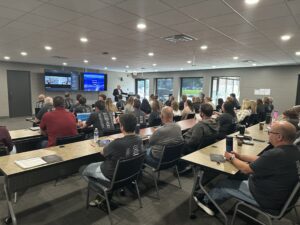
Recently, I spoke at Forward Bank’s EPIC Event: Engage – Play – Inspire – Connect. One of the concepts I shared is that cohesiveness provides a collective sense of identity. The eight components of cohesiveness include shared or compatible goals, progress toward these goals, shared norms, lack of perceived threat between members, interdependence of members, threat from outside the team, shared team experiences, and mutual perceived attractiveness and friendship.
Sharing our predicaments with a friend can relieve our stress, increase our strengths, and help us create innovative solutions for life’s inevitable ups and downs. I have said for years, make sure you spend time with friends that are supporting you, rather than distorting you. Choosing the right companions is key. Some researchers claim one benefit is that friends make us sharper.
Research shows that a 10-minute chat on a social topic can boost executive function; this type of mental agility can help us solve problems.
It is also important to have friends around us who support us when we take stress-filled risks. Friends reduce our body’s stress response. Studies have shown that when people have a negative experience while one of their friends is present, not only do they feel better about themselves afterwards, but they also have lower levels of the stress hormone, cortisol, during the stressful situation, than those people who did not have a friend present.
We can tolerate so much more stress in life when the right people are there to let us know that we are not alone, in good times and bad. Make friendship a priority and schedule time together. Never take friendship for granted. Join a variety of groups that match your interests. Have different friends for different activities. Choose the best people to work alongside, the best people to enjoy social activities, and the best people share the same home.
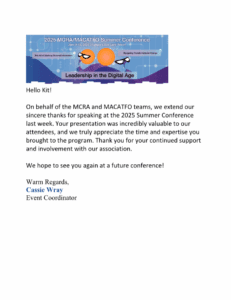
I had the opportunity to spend the morning with Life-Science Innovations. My presentation was on Change Management and Customer Service. Life-Science Innovations (LSI), founded in 2005, is a multi-faceted company comprised of LSI Shared Services, Research & Development, and the Executive Leadership Team. These divisions provide a diversified range of support to their family of companies, helping them grow and develop in their industries.
These companies support industries of engineering, processing, poultry genetics, and agriculture. Life-Science Innovations employs over 1,600 people across multiple states and countries. Life-Science Innovations fosters an environment of discovery, collaboration, and challenging the status quo. They understand the next innovative idea is right around the corner; therefore, they encourage their employees to bring their strengths and ideas to the conversation every day. This event was held at their headquarters located on the beautiful MinnWest Technology Campus in Willmar, MN.
Here are Three Suggested Tips for Change & Exceptional Customer Service.
1. Set Goals and Take Action – Become a Quick-Change Artist
Resistance to change is futile. Being a quick-change artist will build your reputation, while resisting change will ruin it. Being nimble makes you a valuable member of the organization
SMART Goal Setting
Specific / Measurable / Action-Oriented / Realistic / Timely
2. Develop the Right Image – Commit Fully to Your Job
Success belongs to the committed. Work from the heart. Invest passionately in the organization’s objectives. Recommit quickly when change reshapes their work.
Six Criteria of Personal Credibility
Consistently:
1. Appear Warm and Friendly
2. Express Intentions and Motives
3. Demonstrate Trustworthiness
4. Be an Information Source
5. Develop Relevant Expertise
6. Demonstrate Dynamism
3. Master Time Management – Speed Up
Emphasize action, sometimes with radical breakthroughs and sometimes with incremental, step-by-step adjustments. Develop the reputation as one who pushes change along.
Self-Generated Time Wasters
Disorganization / Procrastination / Inability to Say No / Lack of Interest / Burnout / Gossip / Unnecessary Perfectionism
Environmental Time Wasters
Visitors / Telephone Calls / Mail and Email / Waiting for Someone / Unproductive Meetings / Crises (Other Peoples’ Problems) / Coffee Conversations / Unused or Unnecessary Reports
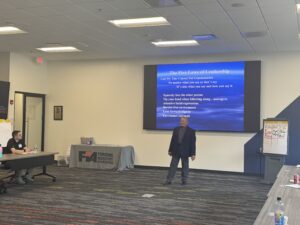
Recently I delivered a keynote presentation at a joint conference for the Minnesota County Recorders Association and the Minnesota Association of County Auditors, Treasurers, and Finance Officers.
My presentation was “Leading in the Digital Age: Become a Leader People Want to Follow.” Much of the presentation dealt with the potential impact AI will have on these county employees, both professionally and personally.
I mentioned in my presentation that resistance to change is almost always a dead-end street. Being a quick-change artist can build your reputation, while resisting change can ruin it. I also suggested that leadership is not just positional; it’s personal.
There are many opportunities that can come from embracing AI in our careers, such as fraud detection, smarter dashboards for public engagement, strengthened cybersecurity, and interdepartmental insights.
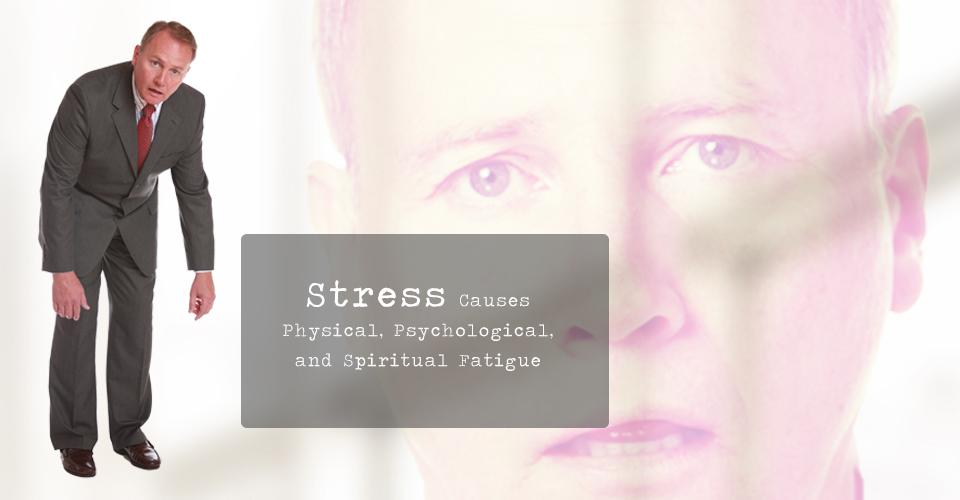
With significant change comes significant concern that causes stress, even for the most competent employee. Change can be mechanical, physical, external and situational. When you face changes in technology, organizational structure, and responsibilities, there can be a personal, psychological toll on staff. Often anxiety rises and motivation falls.
Changes for county recorders include the automation of routine tasks, significant job redesign, and challenges associated with integrating outdated government IT infrastructure. Changes for county auditors include automated auditing, real-time monitoring, and nearly instant data reconciliation. Changes for county auditors include automated auditing, real-time monitoring, and nearly instant data reconciliation. Changes for county treasurers include predictive cash flow analysis, automated payment processing, investment assessment, and dynamic budget data. Changes for county finance officers include budget forecasting, expense optimization, grant and funding tracking, and AI auto-generated financial reports that highlights trends.
Transitions for county recorders may include a reduction in the need for manual clerical work, thus potentially changing staffing needs. Transitions for county auditors include moving from manual audits to more of an oversight role of automated systems and time for personal investigation of flagged issues. Transitions for county reasurers include recognizing that AI may suggest investment or timing decisions, however, legal and politicalconsiderations are still best left to human judgement. Transition for county finance officers may include spending less time on reporting, and more time on strategy. County finance officer roles may shift more toward financial planning and risk mitigation.
So, in a nutshell, change isn’t easy. Even the changes we want are sometimes a struggle. One constant you can rely on is that change is inevitable.
For several years in a row, I have presented a morning seminar on Effective Business Communications at the Forging Industry Association Management Development Institute. Communicating with confidence certainly helps you manage stressful situations and difficult discussions.
One of the key concepts is to be an effective listener. When you show others that you’re listening to them, they may feel that they’re important. As a keynote spaker on leadership, I ask my audiences, “When was the last time you were complimented on your listening skills?”
Consider being consistently friendly and helpful, smile easily, greet others, say thank you, you’re welcome, or pardon me. Practice phone etiquette and open doors for others. When we are polite to others, they will be polite to us. What a relief.
When you are polite to others, you can assume they’ll probably like you, so you in turn like them. Why not keep your self-image positive by being courteous to others and reduce stress? In other words, you know the golden rule, “Do unto others as you would have them do unto you” or the platinum rule, “Do unto others as they would like to be done unto.” But did you know it can help us manage our stress.
Just the simple act of smiling has a positive impact on your attitude and emotional well-being. Smiling transmits nerve impulses from your facial muscles to the limbic system, tilting the neurochemical balance toward calm. So, don’t forget to be polite at work. When you take the time to work positively or constructively with your coworkers, you’ll feel better and it acts as a reinforcement to your own self-worth.
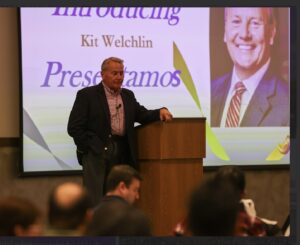
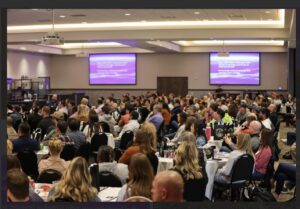
Recently I had the opportunity to return to my roots and speak to an organization that raises hogs, Christensen Farms. Their headquarters is about 25 miles from where I grew up on a hog and dairy farm. My presentation was “Recharge: Strategies for Managing Stress.”
Animal welfare is important to Christensen Farms. Did you know that nurturing and caring for an animal provides significant psychological and physiological benefits? The psychological benefit of engaging animals in happy talk, light-hearted comments, or speaking in an upbeat tone, can relieve stress and lower blood pressure. It may seem silly, but the one-sided conversation can put you at ease. The physiological benefit of a pet is they elevate the hormones such as oxytocin and endorphins, plus the organic chemical of dopamine, which all relate to happiness and relaxation.
Christensen Farms is one of the largest, family-owned pork producers in the United States, marketing approximately 3 million hogs per year. Headquartered in Sleepy Eye, Minnesota, the company operates throughout the Midwest with facilities in Minnesota, Iowa, Nebraska, Illinois and South Dakota. Christensen Farms owns three feed mills, manages 140,000 sows on 44 farms, and oversees more than 350 nurseries and grow finish sites. The company employs nearly 1,000 people and maintains 1,500 contract partnerships.
The Christensen Farms Team is committed to and takes pride in being an industry leader in responsibly producing high quality pork for the noble purpose of providing food to a growing world. Their values include respect, integrity, excellence, adaptability and innovation.
Christensen Farms hosts an annual Leadership Summit in the spring that is sponsored by our three employee resource groups: Latino LEAPP, Women’s LEAPP, and Next Gen LEAPP. LEAPP stands for Learn, Empower, Achieve, Passion, and Purpose. This event aims to provide opportunities for employees to engage in networking and knowledge sharing as well as develop new skills applicable to their jobs.
Last word on stress and animals: studies show that just hanging around an animal decreases your blood pressure. Petting a dog, cat, or horse certainly does, in fact, you may not even need to touch the animal, for instance, just watching a fish casually swim in an aquarium can have a similar effect on lowering blood pressure.



Even the changes we want are stressful. Sometimes you feel like you are the only one struggling. Cohesiveness and connectedness develop through participation. Each activity has the capacity to deepen relationships and build trust. Trust helps us manage the stress.
Take a look at these photos in this blog. These are photos from one of my workshops with one of my healthcare clients that is going through a merger and new identity. The training and planning committee provided fun morning and afternoon team building activities during my sessions. The idea that “we are all in this together” really comes to fruition when people fully participate in these types of activities together.
Organizations like this one are lucky to have a lot of long tenured employees with a deep passion for what they’ve accomplished and done to provide care for their communities, when they weren’t part of a large system. However, along with that also comes a resistance to change. Acknowledging the losses openly and sympathetically and providing training can soothe anxiety and get the organization and their employees and their employees through these types of changes in one piece.
Changing the culture requires the elimination of rigidity. It is necessary to create more fluid processes, assemble temporary teams, and create a work environment where people, ideas, and information circulate freely to deal with specific and ever-changing needs. Curiosity, not certainty, is a critical skill. Engage with each other, experiment to find what works, and support one another through the process.